HODB Access Recap | By Johnny T, Editor of HODB (Hot On Da Block)
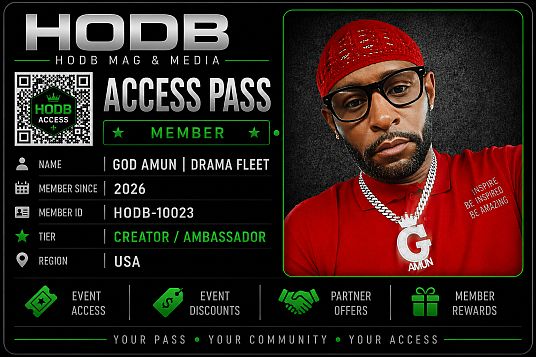
Speaker: https://www.instagram.com/thagodamun7/
Most people think branding is a logo. Some think it is a color scheme.Others think it is a catchy slogan or a social media page. During our recent HODB Access Meeting, entrepreneur, artit, and branding strategist GOD AMUN introduced a much deeper concept—Subconscious Branding—and it changed the way many people in the room thought about marketing forever. His message was simple but powerful:
"The market buys what it remembers, and it remembers what is repeatedly burned into the subconscious."
That idea became the foundation of one of the most insightful branding conversations we've hosted through HODB Access.
What Is Subconscious Branding?
According to GOD AMUN, subconscious branding is the process of consistently imprinting images, sounds, graphics, colors, symbols, phrases, and emotions into the minds of consumers until the brand becomes familiar before a purchase is ever made. He explained that the human mind is constantly collecting visual and auditory information. The brands that win are not always the ones with the biggest budgets; they are often the ones that create the strongest mental associations.Think about hearing a three-note sound and instantly knowing the company behind it. Think about seeing a color combination and immediately recognizing a brand without reading the name. That is subconscious branding at work.GOD AMUN emphasized that branding is not just what people see consciously—it is what stays in their minds after they stop looking.
Burning Images Into the Mind of the Market
One of the most memorable parts of the presentation was his explanation of repetition.He described branding as a process of "burning images and sounds into the minds of the market." The word "burning" was intentional. He wasn't talking about a single advertisement; he was talking about repeated exposure until the audience begins to recognize the brand automatically.He pointed out that successful brands repeatedly expose their audience to:
- The same colors
- The same logo placement
- The same style of photography
- The same music or audio signature
- The same tone of voice
- The same emotional feeling
- The same visual rhythm across every platform
Over time, these repeated signals create a shortcut in the consumer's brain. The audience no longer needs to think about who the brand is—the brain already knows.That is the difference between being seen and being remembered.
Why Most Brands Fail to Stay in People's Minds
GOD AMUN challenged entrepreneurs and artists to look at their own branding honestly.Many businesses change their colors every few months, redesign their logos constantly, use different fonts on every flyer, switch music styles, and communicate with no consistent emotional message.When that happens, the market receives mixed signals.His teaching was clear:
"Confused branding creates confused customers."
Consistency is not boring; consistency is what creates recognition. Recognition is what creates trust. And trust is what creates sales, streams, bookings, and long-term loyalty.
The Emotional Side of Branding
Another powerful insight from the presentation was that subconscious branding is not only visual—it is emotional.People remember how a brand makes them feel.A luxury brand may use dark tones, slow music, and cinematic visuals to create a feeling of exclusivity. A community-driven brand may use warm colors, energetic music, and real-life stories to create a feeling of belonging.GOD AMUN encouraged attendees to ask themselves:What emotion do you want people to feel every time they encounter your brand?If the answer is unclear, the branding is incomplete.
What This Means for Artists and Entrepreneurs
For independent artists, this lesson is critical.Your cover art, intro music, stage visuals, merchandise, social media graphics, and even the way you speak in interviews should feel connected. Every piece should reinforce the same identity.For entrepreneurs, the same principle applies. Your website, business cards, advertisements, email signature, product packaging, and customer experience should all tell the same story.The goal is not to be everywhere randomly. The goal is to be recognized everywhere consistently.
Johnny T's Editorial Perspective
As someone who has spent years documenting artists, brands, and cultural movements through HODB, this presentation resonated deeply with me. The brands that become unforgettable are rarely the ones chasing every trend. They are the ones that understand the psychology of repetition. They create a visual language, an audio language, and an emotional language that people encounter again and again until the brand becomes part of their memory.That's why HODB has remained intentional about its identity—the gritty editorial style, the bold typography, the culture-driven storytelling, and the consistent visual energy across our magazine, media, and events. Branding is not decoration; it is memory engineering.GOD AMUN's presentation reminded everyone in the room that the real battle in marketing is not for attention. It is for a permanent place in the consumer's mind.
Why HODB Access Matters
This is exactly why HODB Access exists. Where else can artists, entrepreneurs, media professionals, and brand builders hear real-world strategies about psychology, branding, networking, and business growth directly from people actively working in the industry? These meetings are not motivational speeches. They are practical conversations that help creators build stronger brands, stronger businesses, and stronger connections.If you're serious about growing your influence, increasing recognition, and learning how to position your brand so the market remembers you, HODB Access gives you direct access to the people teaching these principles in real time.Because in the end, the brands that survive are not always the loudest.They are the ones the market can never forget.
Become an HODB Access Member and experience the conversations that are shaping the future of branding, culture, and entrepreneurship—one powerful connection at a time.